English
 français
 русский
 español
 português
 العربية
 Türkçe
 ไทย
ไทย Tiếng Việt
 Indonesia
  Filipino
INSIGHTS DE ENERGIA | Agosto de 2026 | Equipe Técnica da ZTA Power | leitura de 6 min
Guia de Dimensionamento de Gerador a Diesel: De quantos kW você realmente precisa?
Resposta Rápida
|
Para dimensionar um conjunto gerador a diesel: some sua carga em funcionamento em kW, adicione 20–25% de margem de segurança, considere a kVA de partida do motor (normalmente 3× a corrente de funcionamento), depois converta para kVA usando o fator de potência nominal (0,8). Para a maioria dos locais comerciais e industriais, a classificação final em kVA deve ser 25–30% acima da sua demanda de pico. Sempre escolha um gerador cuja classificação contínua exceda — nunca seja igual — à sua carga máxima. |
Principais Conclusões
✔ kW = potência real que seu equipamento realmente utiliza; kVA = potência aparente que o gerador deve fornecer (kW ÷ fator de potência)
✔ Pico de partida do motor pode exigir 3–6× a potência de funcionamento — esta é a principal razão pela qual os geradores desarmam na partida
✔ O subdimensionamento causa quedas de tensão, parada de motores e danos aos equipamentos; o sobredimensionamento desperdiça combustível e causa acúmulo de combustível não queimado
✔ A altitude e a temperatura ambiente reduzem a capacidade de saída acima de 1.000 m ou 40°C
✔ Sempre especifique potência principal se operar >4 horas/dia;energia de reservaé apenas para uso de emergência
✔ Emparelhe seu grupo gerador com um ATS (Comutador de Transferência Automática)para uma comutação perfeita da rede elétrica para o gerador
Entendendo kW, kVA e Fator de Potência
A maior fonte de confusão no dimensionamento de geradores a dieselé a diferença entre kW (quilowatts) e kVA (quilovolt-ampères). kW mede a potência real que realmente realiza trabalho — acionando motores, elementos de aquecimento, iluminando ambientes. kVA mede a potência aparente, que inclui tanto a potência real quanto a potência reativa (kVAR) que flui para frente e para trás em cargas indutivas, como motores e transformadores, sem ser consumida.
A relação é simples: kVA = kW ÷ Fator de Potência. A maioria dos grupos geradores a diesel industriais é classificada com fator de potência de 0,8, o que significa que um gerador de 1.000 kVA fornece 800 kW de potência utilizável. Se sua instalação precisa de 600 kW continuamente, você precisa de pelo menos 750 kVA (600 ÷ 0,8) — e isso antes de adicionar qualquer margem de segurança.
|
Fórmula: kVA = kW ÷ FP Com FP 0,8: kVA = kW ÷ 0,8 = kW × 1,25 → Uma carga de 500 kW requer um gerador de ≥ 625 kVA |
O Método de Dimensionamento em 5 Etapas
Etapa 1 — Liste todas as cargas. Registre os kW em funcionamento de cada dispositivo. Para motores, observe tanto os kW em funcionamento quanto o kVA de partida. Um motor de 75 kW pode precisar de 225–375 kVA para iniciar (multiplicador de 3–5×).
Etapa 2 — Aplique o fator de demanda. Nem todos os equipamentos funcionam simultaneamente. Aplique um fator de demanda (normalmente 0,7–0,85) para reduzir o total. Uma fábrica com carga conectada de 800 kW e fator de demanda de 0,8 = 640 kW efetivos.
Etapa 3 — Adicione o pico de partida dos motores. Sequencie as partidas dos motores para que o maior motor seja iniciado primeiro quando o gerador estiver com pouca carga. Verifique se o kVA momentâneo não excede a classificação de kVA de partida do motor.
Etapa 4 — Aplicar fatores de redução. Acima de 1.000 m de altitude ou 40°C de temperatura ambiente, a potência de saída cai aproximadamente 3–5% por 500 m e 1% por cada 5°C acima do valor nominal. Um grupo gerador de 1.000 kVA a 1.500 m e 45°C pode fornecer apenas ~870 kVA.
Etapa 5 — Adicionar 20–25% de margem de segurança. Essa reserva absorve futuras adições de carga, transitórios de recuperação de tensão e evita que o motor opere continuamente a 100% da carga — o que reduz a vida útil do motor e aumenta o consumo de combustível.
Exemplo de dimensionamento: Instalação industrial de 500 kW
|
Parâmetro |
Valor |
Observação |
|
Carga conectada |
800 kW |
Placa de identificação de todos os equipamentos |
|
Fator de demanda (0,8) |
640 kW |
Nem todos funcionam ao mesmo tempo |
|
Pico de partida do maior motor |
+ 150 kVA |
Motor de 75 kW × partida de 2× |
|
Subtotal de kW em funcionamento |
640 kW |
|
|
Converter para kVA (÷ 0,8) |
800 kVA |
No FP nominal 0,8 |
|
Adicionar verificação de pico |
950 kVA de pico |
Deve permanecer dentro do limite |
|
+ 25% de margem de segurança |
1.000 kVA |
640 ÷ 0,8 × 1,25 |
|
Grupo gerador recomendado |
1.000 kVA / 800 kW |
Potência nominal contínua |
Erros comuns de dimensionamento (e quanto eles custam)
Subdimensionamento — O gerador desarma, a tensão cai, os motores param e os eletrônicos sensíveis desligam. Em um caso, um gerador de backup hospitalar dimensionado exatamente para a carga de pico falhou durante uma interrupção real porque duas máquinas de ressonância magnética iniciaram simultaneamente. A queda de tensão acionou o UPS, que se esgotou em 8 minutos. Lição: nunca dimensione para corresponder ao seu pico — dimensione para excedê-lo.
Superdimensionamento — Um gerador a diesel silencioso funcionando abaixo de 30% da carga por períodos prolongados desenvolve acúmulo de combustível não queimado — combustível não queimado se acumula no escapamento, carbono se deposita nos injetores e a diluição do óleo se acelera. Um grupo gerador de 2.000 kVA operando com uma carga de 400 kW desperdiça aproximadamente 15–20% mais combustível por kWh do que um operando com 60–75% de carga. A vida útil do motor cai em 30–40%.
Ignorar o kVA de partida do motor — Este é o erro mais frequente. Motores de indução consomem 3–6× sua corrente de funcionamento durante os primeiros 5–15 segundos. Se o seu gerador não puder fornecer esse pico, o motor não dará partida — ou pior, a queda de tensão fará todos os outros dispositivos no barramento desarmarem.
Esquecer a redução de capacidade por altitude e temperatura — Um local de mineração a 2.500 m com temperatura ambiente de 35°C pode apresentar 12–18% menos saída do que a classificação da placa de identificação. Se você dimensionou conforme o manual ao nível do mar, seu grupo gerador terá desempenho inferior no primeiro dia no local.
Caso do Mundo Real: Dimensionamento Correto de uma Fábrica na Etiópia
Uma fábrica têxtil em Adis Abeba (altitude de 2.355 m) solicitou um conjunto gerador a diesel de 1.500 kVA com base no cálculo do engenheiro elétrico deles ao nível do mar. A equipe técnica da ZTA Power revisou o cronograma de carga e identificou três problemas:
1. Redução por altitude: A 2.355 m, a unidade de 1.500 kVA forneceria apenas ~1.260 kVA (perda de 16%).
2. Sequência de partida dos motores: Três compressores de 110 kW foram configurados para iniciar automaticamente ao mesmo tempo — um surto de 990 kVA em uma capacidade disponível de 1.260 kVA. Recomendamos uma partida escalonada com intervalos de 10 segundos.
3. Sem margem de reserva: A seleção de 1.500 kVA deixou margem zero. Recomendamos atualizar para 1.800 kVA, que após a redução por altitude fornecia ~1.510 kVA em altitude — cobrindo confortavelmente o pico de 1.200 kVA com 25% de reserva.
Resultado: Zero quedas de tensão, nenhum desarme, e o grupo gerador alimentado por Cummins com painel ATS funcionou de forma confiável por 18 meses em energia principal. Consumo de combustível com 65% de carga: 185 g/kWh — bem dentro do ponto ideal do motor.
Energia Principal vs. Energia de Reserva: Qual Classificação Você Precisa?
|
|
Energia Principal |
Potência em espera |
|
Tempo de funcionamento |
Horas ilimitadas/ano |
Máx. 200 horas/ano |
|
Carga típica |
60–75% da potência nominal em kW |
70–100% da potência nominal em kW |
|
Sobrecarga permitida |
10% por 1 hora / 12 horas |
Nenhuma (apenas emergência) |
|
Ideal para |
Operações fora da rede, operações contínuas |
Backup da rede, interrupções |
|
Vida útil do motor |
Projetado para mais de 20.000 horas |
Apenas uso ocasional |
Regra prática: Se o seu gerador funcionar mais de 4 horas por dia em média, especifique classificação de potência principal. Unidades com classificação de espera custam menos inicialmente, mas não são construídas para operação contínua.
Perguntas frequentes
P: Posso usar um gerador com classificação de espera para operação diária?
R: Não recomendado. Geradores de espera são projetados para interrupções ocasionais (≤200 horas/ano). Operá-los diariamente reduz a vida útil do motor e anula a garantia. Escolha um grupo gerador a diesel de potência principal para aplicações contínuas.
P: O que acontece se meu gerador for grande demais?
R: Operar com carga abaixo de 30% causa acúmulo de combustível não queimado — combustível não queimado e carbono se acumulam no escape, diluindo o óleo do motor e reduzindo a eficiência. Um grupo gerador com 30% de carga pode consumir 15–20% mais combustível por kW fornecido do que um com 65% de carga.
P: Eu realmente preciso de um ATS?
R: Se você deseja comutação automática sem intervenção humana, sim. Um Comutador de Transferência Automática (ATS) detecta falha da rede, envia sinal para o gerador iniciar e transfere a carga em 10–30 segundos. Sem ele, alguém precisa iniciar manualmente o grupo gerador e acionar o interruptor — o que é inaceitável para hospitais, centros de dados ou qualquer instalação que não possa tolerar tempo de inatividade.
P: Quanto de redução de potência devo aplicar para alta altitude?
R: Aproximadamente 3–5% por 500 m acima de 1.000 m, mais 1% por cada 5°C acima de 40°C. Sempre confirme com a tabela de redução de potência do fabricante do motor para o seu modelo específico.
P: Devo escolher um aberto ou gerador fechado (silencioso)?
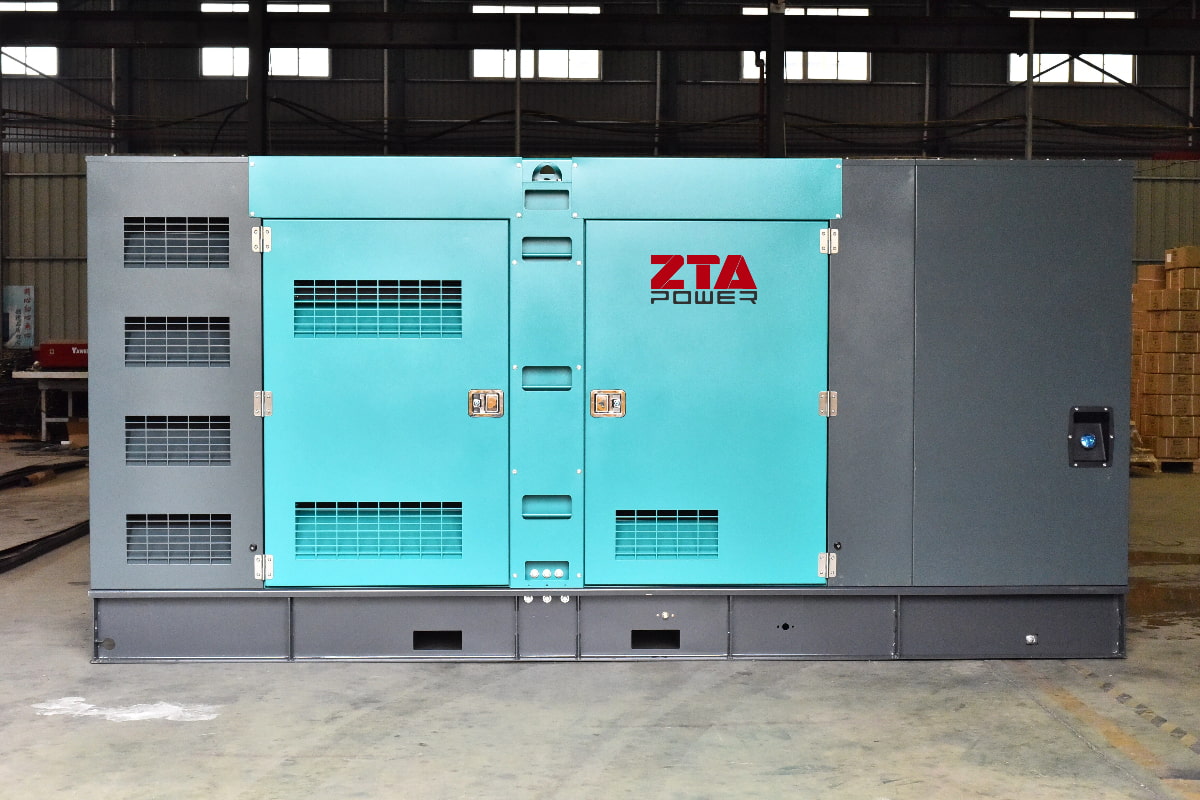
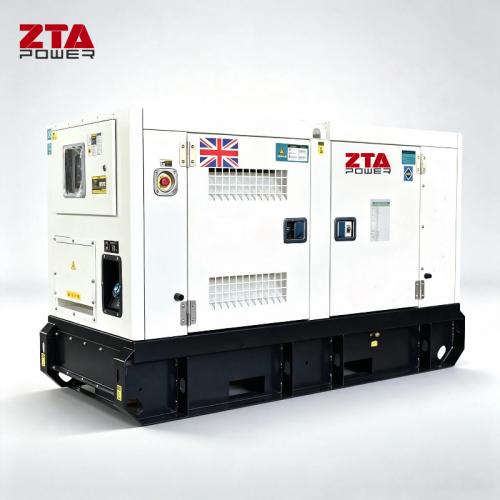
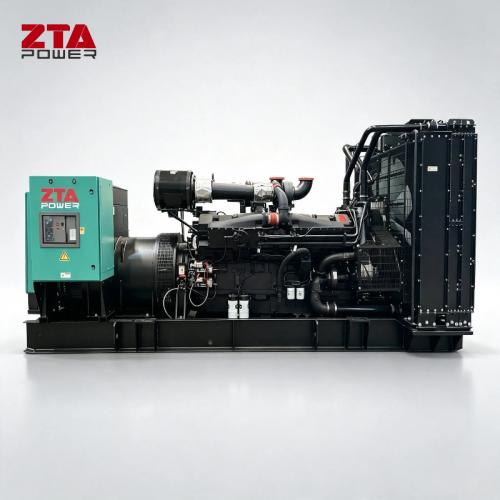
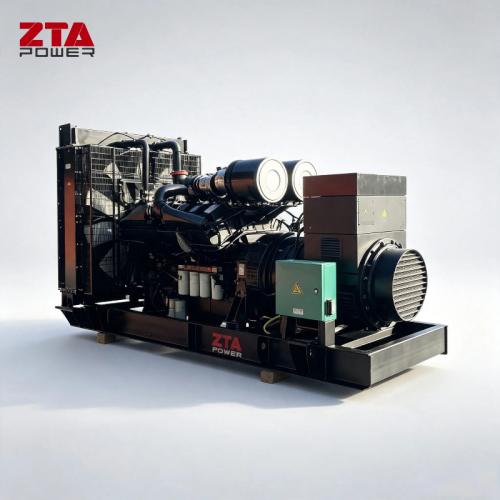
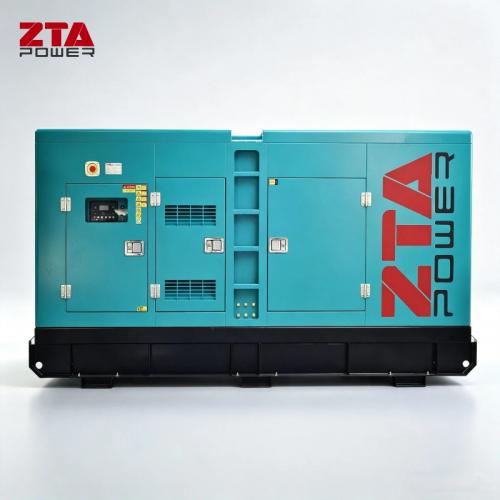
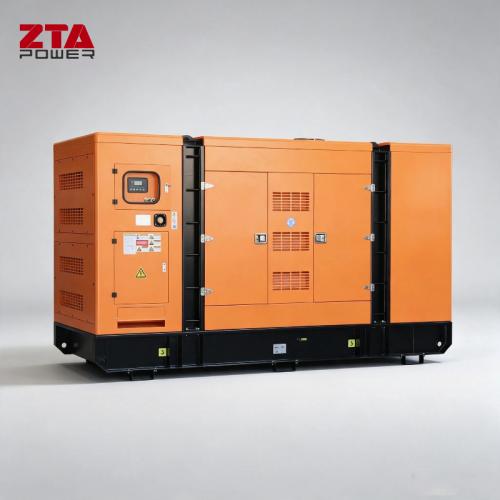
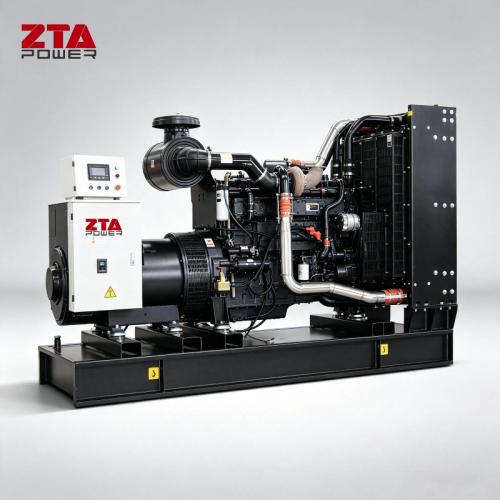
A: Os conjuntos abertos são adequados para locais remotos sem regulamentações de ruído. Para áreas urbanas ou residenciais, um gerador a diesel silencioso com uma cobertura acústica (65–75 dB(A) a 1 m) é essencial. A cobertura também protege contra intempéries e vandalismo.
Precisa de ajuda para dimensionar seu gerador?
Envie-nos sua lista de cargas e as condições do local — os engenheiros da ZTA Power recomendarão o grupo gerador a diesel adequado em até 24 horas.

 Rede IPv6 suportada